Dharitri carries ARPA Foundation's field research into public argument — peer-reviewed science, policy analysis, and grounded commentary on land, water, and the communities who steward them.
42
Research Articles
1
PDF Downloads
17
Editorial Board
32
Authors
Featured Highlights
Opinion Column - 03-10-2026 15 October 2026 7 min read
A hotter world is rewriting the rules of disaster
2024 was the warmest year in the 175-year instrumental record, the first calendar year to cross 1.5°C above the pre-industrial average, and also the year in which extreme weather displaced more people than in any of the previous sixteen.
2024 was the warmest year in the 175-year instrumental record, the first calendar year to cross 1.5°C above the pre-industrial average, and also the year in which extreme weather displaced more people than in any of the previous sixteen.
André C. S. Batalhão 15 October 2026 7 min read 30 viewsRead
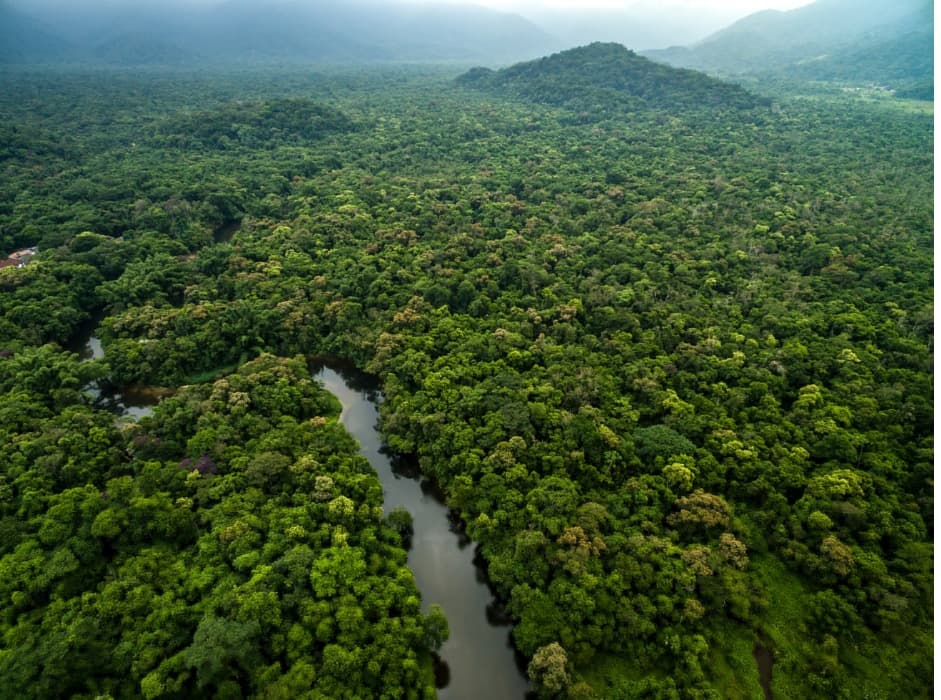
India and the Amazon Basin offer important comparative lessons about planetary health, showing how ecosystem durability and human wellbeing increasingly depend on governance and decision rights over land use.
Vivek Singh 9 October 2026 11 min read 57 viewsRead
Across much of India, groundwater is the primary source of drinking water and irrigation. Nitrate contamination — driven by fertilizer overuse and flood irrigation — is rising silently in these aquifers. Drawing on field and laboratory research, this article traces the journey from soil nitrogen to drinking-water health risk, and outlines practical steps for farmers, policymakers, and water managers.
Preetismita Borah 3 October 2026 7 min read 44 viewsRead
When floodwater recedes, wildfire smoke clears, or rainfall finally returns after a prolonged drought, people tend to assume the most critical environmental phase of the disaster has ended. This perception is understanda
Guilherme Malafaia 29 September 2026 7 min read 37 viewsRead
Filter & Search
Editorial Leadership
Editorial Board
17 members
No. 01Editor-in-Chief
PA
Professor A.S. Raghubanshi
ARPA Opportunity Foundation
Professor A.S. Raghubanshi is a distinguished environmental scholar and the founding Director of the Institute of Environment and Sustainable Development at Banaras Hindu University. Internationally respected for his work on tropical ecosystems and urban environments, he has made enduring contributions to ecological research, sustainability scholarship, and academic leadership in India.
Director, Institute of Environment and Sustainable Development, Banaras Hindu University, Varanasi, India
No. 02Editorial Board Member
DP
Dr. Pardeep Singh
ARPA Opportunity Foundation
Dr. Pardeep Singh works on environmental management, climate change, sustainability, water scarcity, food security, and the Anthropocene. His scholarship reflects a strong commitment to interdisciplinary research, academic publishing, and dialogue on contemporary environmental challenges.
Assistant Professor, Department of Environmental Studies, P.G.D.A.V. College, University of Delhi, New Delhi, India
No. 03Editorial Board Member
DO
Dr. Olga Ustyuzhantseva
ARPA Opportunity Foundation
Dr. Olga Ustyuzhantseva’s work lies at the intersection of innovation policy, digital governance, climate change, and sustainable development. Her international research engagement contributes to broader conversations on transformative systems, technology, and sustainability transitions
Affiliated Senior Research Fellow, Trilateral Chair on Transformative Innovation and the Fourth Industrial Revolution for Sustainable Development, University of Johannesburg
No. 04Editorial Board Member
DN
Dr. Neha Srivastava
ARPA Opportunity Foundation
Dr. Neha Srivastava is a recognized scholar in waste biorefineries, microbial technology, bioprocesses, and green nanotechnology. Her academic contributions span research, editorial leadership, innovation, and scientific publishing in areas central to sustainable environmental advancement
Research Scientist, Department of Chemical Engineering and Technology, IIT (BHU), Varanasi,
No. 05Editorial Board Member
DS
Dr. Shikha Daga
ARPA Opportunity Foundation
Dr. Shikha Daga’s academic work bridges finance and sustainability, with interests in green economy, climate change, circular economy, and sustainable development. Her scholarship brings an important interdisciplinary perspective to the interface of commerce, policy, and environmental responsibility.
Associate Professor, Department of Commerce, P.G.D.A.V. College, University of Delhi, New Delhi, India
No. 06Editorial Board Member
DS
Dr. Sushil Kumar
ARPA Opportunity Foundation
Dr. Sushil Kumar specializes in air pollution, atmospheric microplastics, and environmental chemistry. His research and teaching contribute to a deeper understanding of environmental pollution processes and their broader implications for ecological and public well-being.
Assistant Professor, Department of Environmental Studies, Siksha-Bhavana, Visva-Bharati, Santiniketan, West Bengal, India
 Opinion Column - 03-10-2026