VS
Vivek Singh
PhD researcher at Vellore Institute of Technology (VIT), India
Planetary health began as a diagnosis. The 2015 Rockefeller Foundation–Lancet Commission defined it as the ‘achievement of the highest attainable standard of health, wellbeing, and equity worldwide through careful attention to the political, economic, and social systems that determine both humanity’s future and the limits within which it can flourish’ (Whitmee et al., 2015). A decade later, the field has evolved as an interdisciplinary enterprise analysing the ripple effects of human interventions in the Earth’s systems on human well-being, with researchers increasingly tying environmental degradation to the global burden of non-communicable disease, with low- and middle-income countries bearing the brunt of the damage (Kakaraparthi et al., 2026).
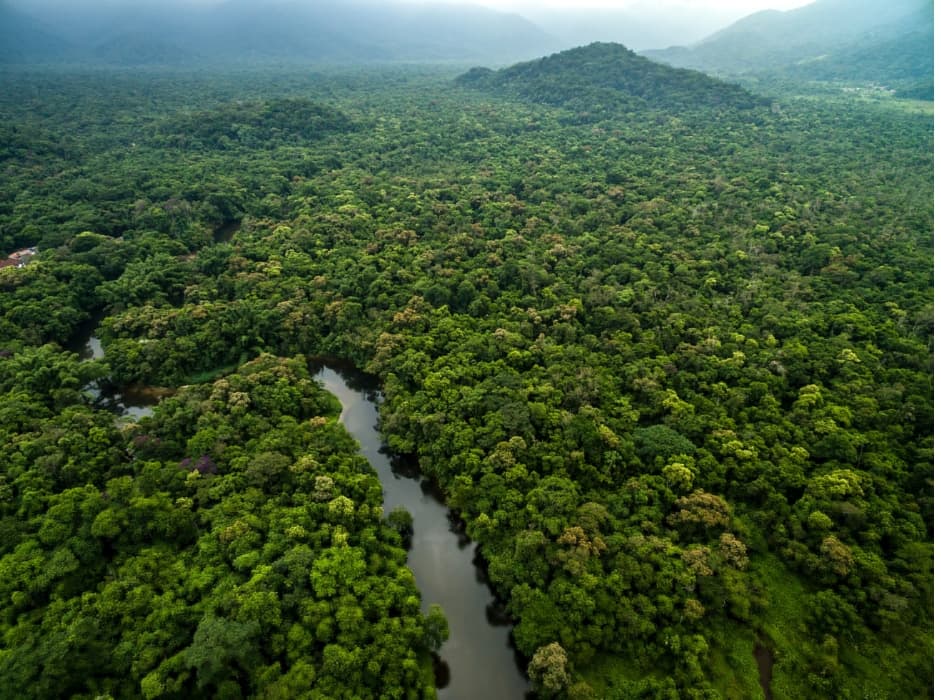
India and the Amazon Basin are two of the most illuminating case studies for this thesis, each in very different ways. One represents a subcontinent-scale demographic experiment testing the limits of thermal tolerance; the other, a forested system whose inherent stability sustains regional and global climate. Both contain important lessons about the connection between the durability of ecosystems and human health that are not always articulated explicitly in the planetary health research: that durability is increasingly a function, not of physical characteristics of the environment, but of governance and decision rights over land use.
India’s planetary health emergency manifests through heat. People in India experienced close to twenty heatwave days on average in 2024, of which about six and a half would not have happened without climate change, according to the Lancet Countdown’s ninth report (Romanello et al., 2025). An official count recorded more than 450 premature deaths from that year’s heatwaves, while the World Meteorological Organization’s regional assessment warned of intensifying extremes across water, agriculture, and coastal systems (Ravindra, 2025). District-level risk mapping covering 734 administrative units now reveals that heat impacts power demand, crop yields, and water resources simultaneously, with public health systems bearing the brunt (Prabhu et al., 2025). City-level heat action plans, when benchmarked against WHO’s core planning elements, continue to show significant gaps in intersectoral governance and integration with early-warning systems (Dasgupta et al., 2025).
Fire is the Amazon’s stressor of choice. The 2024 fire season was South America’s worst on record, with over 346,000 fires, and burned areas in Brazil ten times the size of Spain, blanketing sixty per cent of the continent in smoke for months (de Arruda et al., 2026). Atmospheric chemistry transport modellers estimate that fire-related smoke caused around 12,000 premature deaths annually across the continent between 2014 and 2019, with mortality rates approximately double in Indigenous territories relative to the continental average (Bonilla et al., 2023). The importance of this fact is not that either region suffers environmental health shocks — that would be expected — but that both crises are substantial anthropogenic accelerants of natural variability, concentrating harm in populations least able to move, litigate, or adapt.
A second, less obvious link connects the two regions — land-use change as a vector for disease. A thirteen-year geospatial study of the Brazilian Amazon found a feedback loop wherein deforestation significantly increases malaria transmission while the high malaria burden simultaneously discourages further forest clearing (MacDonald & Mordecai, 2019). Recent landscape-scale work suggests that the danger is greatest not at the frontier but at intermediate levels of forest loss, where fragmented forest maximises both mosquito vector density and human-forest contact (Laporta et al., 2025). Among Indigenous communities living near illegal mining operations, children under ten now shoulder a disproportionate share of malaria cases, compounded by deteriorating healthcare access in remote areas (Martins-Filho et al., 2023). India’s parallel is less an infectious-disease pathway than a thermal-physiological one, but the mechanism is structurally identical: ecological disruption converts into embodied harm through ecological vectors — vector ecology, urban heat islands, and aquifer depletion — that public health systems were never designed to address at this scale or speed.
The comparative advantage of the two regions emerges with the discussion of resilience. Both possess an existing underutilised institutional capacity — legally recognised community stewardship of common-pool resources.
The evidence in the Amazon is now overwhelming. Forests under Indigenous management demonstrate two to three times lower deforestation rates than their non-Indigenous counterparts and store significantly more carbon (Global Citizen, 2025). Indigenous territories, which cover roughly a third of the Amazon basin, account for only about eight per cent of its carbon losses — an astonishing asymmetry given the pressure these lands face (Woodwell Climate Research Center, 2021). Crucially, the mechanism is not romantic ecological instinct but institutional property rights: satellite analysis of 377 Indigenous territories over three decades has found that formal recognition of land tenure not only reduced deforestation within those territories but also spurred secondary forest regrowth in previously cleared land (Baragwanath & Bayi, 2023). This is a particularly relevant finding at this moment, because satellite analysis of twenty-five years of Amazon data has found resilience loss — diminished capacity to recover from drought, fire, and logging — across more than three-quarters of the basin, with modelling suggesting that between ten and nearly half the Amazon could transition from rainforest to savanna by mid-century without a significant reduction in deforestation (Boulton, Lenton, & Boers, 2022). Tenure security is not peripheral to climate policy; it is one of the few interventions demonstrated to bend the arc of an imminent planetary tipping point.
India’s parallel is the 2006 Forest Rights Act, which recognises the rights of forest-dwelling communities to protect, regenerate, and manage community forest resources, as well as the rights to traditional ecological knowledge associated with biodiversity (The Wire, 2025). Yet implementation lags the promise: of 1,378 Gram Sabhas eligible for community forest rights in one detailed review, only 243 had received them (Rastogi, 2024). A 2022 study found India’s forest-dependent communities at the frontlines of climate disasters despite contributing the least to the emissions forcing them, with national climate policy continuing to fail to reflect a rights-based, decentralised approach (Dash et al., 2022).
Water provides a more consolidated success story. In drought-ravaged Rajasthan, revival of johads — traditional community rainwater harvesting structures abandoned under colonial and later state administration — helped recharge aquifers and return perennial flow to rivers that had run dry, eventually bringing migrants back to more than 1,300 villages (Scientific American, n.d.; Bhoomi Magazine, 2017). The lesson generalises: community-driven, decentralised water management is increasingly recognised as an important pathway to securing environmental, social, and economic resilience, particularly for the approximately 3.2 billion people worldwide who live with water shortages (Hetherington et al., 2025).
What India and the Amazon share is not just exposure to climate stress, but a resilience dividend associated with customary institutions receiving formal authority over the ecosystems they manage. This represents a departure from the conventional planetary health narrative, which often treats communities as vulnerable populations in need of protection by external health and conservation systems. The comparative analysis of India and the Amazon implies that the reverse relationship, the extent to which devolved governance should be understood as a determinant of health, warrants as much attention as the forward relationship, with documented effects on vector ecology, carbon stability, and water security that centralised state or market interventions have been unable to achieve at comparable cost (Ruiz de Castañeda et al., 2023; NASA Earth Observatory, 2026; Mongabay / World Resources Institute, 2023).
The policy implication is in how centralised climate finance architectures are structured — most of which tend to channel resources through national governments and large NGOs — because the evidence suggests that a greater portion of that finance would achieve more if it were redirected toward tenure recognition and legal enforcement at the Gram Sabha or Indigenous-territory level. Directing climate funds toward strengthening forest rights and devolving them to local governance bodies is exactly the recommendation emerging from India’s own rights-based climate research (Dash et al., 2022), and the Amazon literature produces a structurally similar conclusion (Global Citizen, 2025; Baragwanath & Bayi, 2023). On this analysis, planetary health outcomes are as much shaped by land governance and tenure policy as by emissions accounting.
India and the Amazon Basin represent two distinct pathways by which anthropogenic environmental change converts into human health burden — thermal stress and heat mortality in one case, fire, smoke, and vector-borne disease in the other — yet both cases suggest a single policy lever. Ecosystems under secure, formally recognised community governance consistently demonstrate greater resilience to climate shocks, lower rates of degradation, and better health outcomes for the populations who depend on them, whether measured through Amazonian carbon retention or Rajasthani aquifer recharge. This suggests that planetary health frameworks, which have historically emphasised emissions reduction, ecosystem protection, and health-system adaptation as largely separate policy domains, would benefit from considering land tenure and community governance as a fourth, integrating pillar. Future research should investigate whether the resilience dividend observed in these two regions generalises to other forest- and water-dependent systems, and whether climate finance mechanisms can be redesigned to reach local governance bodies directly rather than through national intermediaries. The comparative evidence assembled here does not resolve these questions, but it establishes that they are empirically tractable rather than aspirational — and that the durability of both ecosystems and the people who depend on them may turn on decisions being made now about who governs land.
Baragwanath, K., & Bayi, E. (2023). Collective property rights lead to secondary forest growth in the Brazilian Amazon. Proceedings of the National Academy of Sciences, 120(23), Article e2221160120. https://doi.org/10.1073/pnas.2221160120
Bhoomi Magazine. (2017). We can cure our water woes: An account of the Johad movement led by Rajendra Singh and Tarun Bharat Sangh. Bhoomi Network. https://bhoomimagazine.org/
Bonilla, E. X., Mickley, L. J., Raheja, G., Eastham, S. D., Buonocore, J. J., Alencar, A., Verchot, L., Westervelt, D. M., & Castro, M. C. (2023). Health impacts of smoke exposure in South America: Increased risk for populations in the Amazonian Indigenous territories. Environmental Research: Health, 1(2), Article 025005. https://doi.org/10.1088/2752-5309/acd077
Boulton, C. A., Lenton, T. M., & Boers, N. (2022). Pronounced loss of Amazon rainforest resilience since the early 2000s. Nature Climate Change, 12(3), 271–278. https://doi.org/10.1038/s41558-022-01287-8
Dash, T., Kothari, A., & Srivastava, S. (2022). Effective implementation of the Forest Rights Act can help India secure a just and sustainable pathway to climate change mitigation and adaptation. Rights and Resources Initiative. https://rightsandresources.org/
Dasgupta, R., Dayal, V., Murali, A., Sharma, G., Dasgupta, P., Mishra, A., & Pany, P. (2025). Unpacking heat action plans in 8 Indian cities: Knowledge gaps and opportunities for intersectoral heat governance (SSRN Working Paper No. 5123456). Institute of Economic Growth, Delhi. https://doi.org/10.2139/ssrn.5123456
de Arruda, F. V., Alencar, A. A. C., & Monteiro, N. C. (2026). Amazonia on fire: Air quality in 2024 and 2025. Instituto de Pesquisa Ambiental da Amazônia (IPAM). https://ipam.org.br/
Flores, B. M., Montoya, E., Sakschewski, B., Nascimento, N., Staal, A., Betts, R. A., Levis, C., Lapola, D. M., & Hirota, M. (2024). Critical transitions in the Amazon forest system. Nature, 626(7999), 555–564. https://doi.org/10.1038/s41586-023-06970-0
Global Citizen. (2025). Why Indigenous land rights are key to protecting the Amazon. Global Citizen. https://www.globalcitizen.org/
Hetherington, D., Jain, M., Bingham, L., & Lucero, C. (2025). Sharing traditional water management techniques to deliver SDGs and tackle the global water crisis. International Association for Hydro-Environment Engineering and Research (IAHR). https://www.iahr.org/
Kakaraparthi, V. N., Samuel, P. S., Agarwal, S., Velukuri, K., Konda, N. J. G., & Kakaraparthi, L. (2026). Planetary health and non-communicable diseases—A converging global crisis. Frontiers in Public Health, 14, Article 110293. https://doi.org/10.3389/fpubh.2026.110293
Laporta, G. Z., Valle, D., Prist, P. R., Ilacqua, R. C., Santos, T. C., Madeira, F. P., Silva, G. M., Brilhante, A. F., Nolan, M. S., & Speranca, M. A. (2025). Intermediate forest cover and malaria risk in an Amazon deforestation frontier. Acta Tropica, 269, Article 107382. https://doi.org/10.1016/j.actatropica.2025.107382
MacDonald, A. J., & Mordecai, E. A. (2019). Amazon deforestation drives malaria transmission, and malaria burden reduces forest clearing. Proceedings of the National Academy of Sciences, 116(44), 22212–22218. https://doi.org/10.1073/pnas.1905315116
Martins-Filho, P. R., Damascena, N. P., Araújo, A. P. D., Silva, M. C., Santiago, B. M., Deitos, A. R., & Machado, C. E. P. (2023). The devastating impact of illegal mining on indigenous health: A focus on malaria in the Brazilian Amazon. EXCLI Journal, 22, 400–402. https://doi.org/10.17179/excli2023-6012
Mongabay & World Resources Institute. (2023). Indigenous forests are some of the Amazon’s last carbon sinks. World Resources Institute. https://www.wri.org/
NASA Earth Observatory. (2026). Indigenous communities protect the Amazon. National Aeronautics and Space Administration. https://earthobservatory.nasa.gov/
Prabhu, S., Suresh, K. A., Mandal, S., Sharma, D., & Chitale, V. (2025). How extreme heat is impacting India: Assessing district-level heat risk. Council on Energy, Environment and Water (CEEW). https://www.ceew.in/
Rastogi, S. (2024). Erosion of community forest rights in India under the Forest Rights Act, 2006. Vidhi Centre for Legal Policy. https://vidhilegalpolicy.in/
Ravindra, K. (2025). Strengthening India’s climate-health resilience: A public health imperative. npj Climate Action, 4, Article 103. https://doi.org/10.1038/s44168-025-00210-9
Romanello, M., Walawender, M., Hsu, S. C., Moskeland, A., Palmeiro-Silva, Y., Scamman, D., Smallcombe, J. W., & Costello, A. (2025). The 2025 report of the Lancet Countdown on health and climate change: Climate change action offers a lifeline. The Lancet, 406(10515), 1801–1845. https://doi.org/10.1016/S0140-6736(25)01234-5
Ruiz de Castañeda, R., Villers, J., Guzmán, C. A. F., Eslanloo, T., de Paula, N., Machalaba, C., Zinsstag, J., Utzinger, J., Flahault, A., & Bolon, I. (2023). One Health and planetary health research: Leveraging differences to grow together. The Lancet Planetary Health, 7(2), e109–e111. https://doi.org/10.1016/S2542-5196(22)00332-9
Scientific American. (2022). This astoundingly simple ancient technique is helping to beat back drought [Video]. Scientific American. https://www.scientificamerican.com/
The Wire. (2025). How the Forest Rights Act can shape India’s climate action. The Wire Science. https://thewire.in/
Whitmee, S., Haines, A., Beyrer, C., Boltz, F., Capon, A. G., de Souza Dias, B. F., Ezeh, A., Frumkin, H., Gong, P., Head, P., Horton, R., Mace, G. M., Marten, M. G., Myers, S. S., Nishtar, S., Osofsky, S. A., Pinner, A. K., Pongsiri, M. J., Yach, D., & Yosella, D. (2015). Safeguarding human health in the Anthropocene epoch: Report of The Rockefeller Foundation–Lancet Commission on planetary health. The Lancet, 386(10007), 1973–2028. https://doi.org/10.1016/S0140-6736(15)60901-1
Woodwell Climate Research Center. (2021). Powerful and vulnerable, Indigenous communities are key to protecting the Amazon. Woodwell Climate Research Center. https://www.woodwellclimate.org/
Disclaimer: The views expressed in this article are solely those of the author and do not necessarily represent the views, policies, or positions of the organisation.