
Dr. Mamun Mandal
Department of Botany, Murshidabad University and University of Gour Banga, West Bengal, India
New research from Malda, West Bengal, an urban sprawl in eastern India, warns that tiny plastic fragments are now drifting down from the sky like invisible dust-and this airborne "microplastic rain" could be silently harming our health and environment.
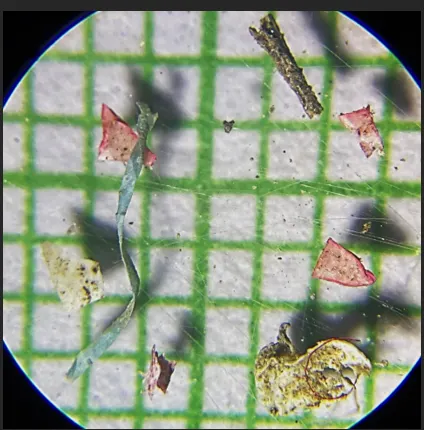
Microplastics (MPs) are plastic particles smaller than 5 mm, produced when larger plastic items break down due to sun, heat, mechanical wear, and weathering. Earlier studies found them in oceans and rivers, but more recent work shows MPs are now common in the atmosphere too, where they can be carried hundreds of kilometres by wind before settling on soil, water, and rooftops.
In Malda, West Bengal, researchers collected "total atmospheric deposition" on glass jars and discovered that microplastic particles are raining down at rates between about 122 and 388 particles per square meter per day, depending on the site. The highest flux was near plasticrecycling facilities and the main town, suggesting that dense human activity and local industry are key sources.
Because these airborne microplastics are mostly very small (often 50-100 micrometres, thinner than a human hair), they can remain suspended in the air and be inhaled deep into the lungs. Previous global studies estimate that an average person may inhale roughly 500 microplastic particles per day, though this is likely an underestimate because the tiniest particles are harder to detect.
Inside the body, microplastics can:
Irritate lung tissue and potentially trigger chronic respiratory diseases, asthmalike symptoms, or inflammation.
Carry toxic chemicals (plastic additives, heavy metals, persistent organic pollutants) that may weaken the immune system or disturb hormones.
Enter the food chain via soil and plants, eventually reaching the dinner table in vegetables, grains, and even drinking water.
The Malda, West Bengal, study also showed that the most common polymers are polyethylene (PE), polyvinyl chloride (PVC), and polyethylene terephthalate (PET)-materials used in plastic bags, bottles, pipes, and packaging-all of which carry their own chemical hazards.
The Malda team further calculated an "ecological risk index" for airborne microplastics and found that the city centre and the plasticrecycling area fall into "medium to extreme" hazard categories, mainly because of high deposition of PVC and PMMA (a plastic often used in lights, frames, and vehicle parts). When these plastics break down, they can release carcinogenic or toxic organic compounds, especially under strong sunlight or heat.
Beyond Malda, experts warn that:
Microplastics in air can influence cloud formation and climate by acting as tiny cloudformation nuclei.
Accumulating MPs in soil can disrupt soil microbes, earthworms, and nutrient cycling, indirectly affecting crop health and food safety.
There is no "safe" level of airborne microplastics yet, but several simple, everyday steps can reduce exposure and longterm health risks:
Reduce singleuse plastics: Cut down on plastic bags, bottles, and packaged food; choose reusable cloth, glass, or metal containers instead.
Improve indoor air quality: Use air filters (especially in homes near busy roads or industrial areas), keep windows slightly closed during peak traffic hours, and keep indoor dust low with regular dampmopping and vacuuming.
Rinse fruits and vegetables thoroughly: Washing can help remove some surface microplastics and associated pollutants picked up from air and soil.
Support better waste and recycling systems: Avoid burning plastic; encourage local authorities to secure plasticrecycling facilities and manage plastic waste to reduce airborne MPs.
Advocate for monitoring and policy: Push for more airquality monitoring in cities that includes microplastics, and support regulations that phase out unnecessary plastic and promote cleaner production.
The Malda study is one of the first to map airborne microplastics in an Indian urban sprawl and to quantify their ecological risk, highlighting that our cities are not just filled with conventional air pollutants like PM2.5, but also with invisible plastic "aerosol dust." Scientists call for longerterm studies across India and other developing countries to better understand how much people are being exposed and how strongly this is linked to respiratory disease, cardiovascular problems, and other chronic health effects.
For the public, the message is clear: what we throw away and how we live with plastic is no longer just a "litter" problem-it has become an airquality and healthcare issue that every household can help address.
Mandal, M., Roy, A., Singh, P. and Sarkar, A. (2024) Quantification and characterization of airborne microplastics and their possible hazards: a case study from an urban sprawl in eastern India. Frontiers in Environmental Chemistry, 5:1499873. doi: https://doi.org/10.3389/fenvc.2024.1499873