
Aleksei Sorbale
Researcher, HSE University, St. Petersburg School of Social Sciences
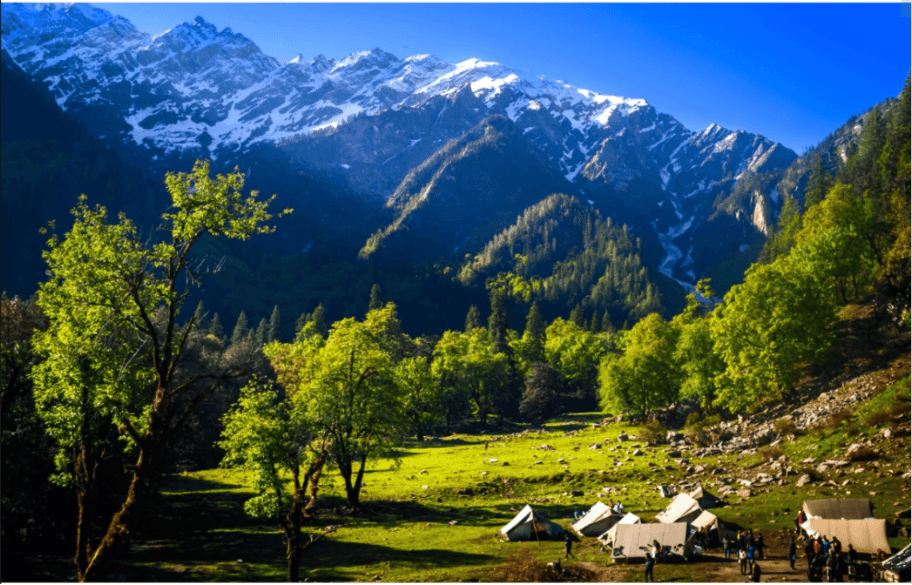
The consequences of climate change are felt most acutely at the local level, yet adaptation requires coordinated action across multiple levels of governance. This is particularly true in India’s asymmetric federal system, where states and union territories possess varying degrees of autonomy. The present study, based on 50 interviews collected during two expeditions to the Indian Himalayas in 2024 (20 in Jammu & Kashmir, 30 in Himachal Pradesh), examines how differences in regional status influence the design and implementation of climate resilience policies for local communities. Interviewees included farmers, nomads, business owners, panchayat members, and government officials. The research also draws on analysis of federal programmes such as RGGVY (rural electrification), Jal Jeevan (water supply), and agricultural mechanisation schemes.
---
Theoretically, the study employs a principal-agent framework. As Gailmard notes, when a principal (the federal government) delegates authority to an agent (a regional government), three problems often arise: moral hazard, where agents delay or sabotage policies for their own benefit; hidden action, where agents act without monitoring; and divergent goal-setting, leading to policy drift. Decentralisation can mitigate these problems, but its success depends on local problem-solving capacity. Existing literature shows that in countries with strong central control, such as China and Morocco, regional autonomy is often constrained. On the other hand, studies from Indonesia and the United States demonstrate that local authorities can develop more responsive climate strategies. In India, researchers have noted weak vertical coordination and argue for greater state autonomy, with positive examples from Himachal Pradesh and Odisha.
Jammu & Kashmir (J&K) and Himachal Pradesh (HP) share similar geographic and economic characteristics: both are mountainous, agrarian, and dependent on tourism. However, their political status differs dramatically. In 2019, J&K was stripped of its special constitutional status under Article 370 and reorganized as a union territory with minimal financial and administrative autonomy. All major policies are directed by the federal centre. In contrast, HP is a full state with constitutional autonomy, a functioning two-party system, and the ability to design its own State Action Plan on Climate Change (SAPCC). These differences profoundly shape climate governance.
In J&K, the centralised, top-down model has led to uneven implementation. Farmers report that they can harvest only once a year. Federal programmes provide solar panels under RGGVY, yet Bhatt, Singh, and Hagedorn note that electrification in northern regions has reached only 20-25% of targets, partly due to local authorities diverting funds to more visible projects. Water supply through the Jal Jeevan Mission has brought mixed results. One respondent recalled: “Water used to come from a community irrigation system called kuhl. Now the government has installed a water supply system, and people drink this cleaner water”. But another complained: “The water from the pipes tastes bad and is contaminated with bacteria and insects”. A third simply stated: “The pipes are there, but they don’t work”. An official report on Jal Jeevan Mission (2000) attributes such failures to insufficient involvement of local communities in planning.
Agricultural subsidies mostly targeting the goal to provide cheap seeds under the Antyodaya Anna Yojana and Kisan Credit Cards for low‑interest loans are available, but the research shows that outdated federal data exclude many genuinely needy households. For disaster resilience, the government provides 150,000 rupees for housing reinforcement, yet the 2014 floods and landslides demonstrated the limited effectiveness of these measures. Land conflicts, exacerbated by fragmentation of holdings, are typically resolved not by the state but by panchayats, which enjoy greater trust. As one respondent explained: “Ten representatives of the village gather together and make decisions. Problems are solved locally, within the community”. Meanwhile, residents of remote villages report almost no contact with the government: “In this area, we do not think the state takes measures to help the local population. People organise everything themselves”. Tourism is promoted by the centre as a development strategy, but locals complain about environmental damage from domestic tourists. A guest‑house owner noted: “The tourism department does nothing; in some villages people are conscious and clean, but during pilgrimage season it is almost impossible to clear the roads and trails”.
In contrast, Himachal Pradesh’s regional autonomy enables more flexible and responsive governance. The state has developed SAPCC, which covers adaptation, mitigation, and natural resource management, although implementation remains a work in progress. Farmers receive subsidies for machinery. One farmer in Urgos village mentioned: “Machines, cultivators, electric cultivators and lawnmowers are being actively introduced”. Another from Shakto village confirmed government support for agricultural equipment. The federal NREGA programme guarantees rural employment, and a respondent praised it: “They give a guarantee that they will provide work… NREGA is a good example, and everything is subsidised, supported by the government”. This programme not only creates jobs but also improves water infrastructure and soil stability, thereby enhancing climate resilience.
Tourism businesses also benefit from state support. A hotel owner in Jispa described: “They organise several seminars where they provide all the information… on such‑and‑such a day there will be a seminar on such‑and‑such a topic, and then we all gather together”. This informational and financial backing helps local entrepreneurs navigate seasonal fluctuations and environmental risks. Significantly, residents express greater trust in regional programmes than in federal initiatives, because they see tangible results. However, climate risks, primarily rapid glacier melt, shifting seasons, and erratic rainfall, affect all sectors, and the state continues to face challenges in fully systematising its adaptation efforts.
To summarise, Himachal Pradesh’s regional autonomy fosters a coherent, locally adapted governance model. Its ability to tailor policies to specific needs – from machinery subsidies to tourism seminars – builds trust and effectiveness. Jammu & Kashmir, by contrast, remains trapped in a vertical, centralised system. Federal programmes suffer from poor local fit, implementation failures, and low community engagement. The degree of centralisation and support for local initiatives thus appears as a crucial factor determining the success of climate policy in India’s mountain regions. Decentralisation, as the literature suggests, is not a panacea, but in the Himalayan context, it enables the problem‑solving capacity that top‑down mandates cannot replace.
• Banks, J. S., & Sundaram, R. K. (1993). Moral hazard and adverse selection in a model of repeated elections. In W. Barnett, H. Hinich, & N. Schofield (Eds.), Political economy: Institutions, information, competition, and representation (pp. 295–311). Cambridge University Press.
• Bhatt, B., Singh, A., & Hagedorn, K. (2022). Regulatory reforms and technology adoption in the Indian electricity distribution sector: An interplay of actors, institutions, governance structure and technology. Institutions, Governance Structure and Technology, 4–16.
• Chathukulam, J., Joseph, M., Rekha, V., Balamurali, C. V., & Thilakan, T. V. (2021). Mission Antyodaya: Well envisioned but poorly understood. Editorial Team, 140–151.
• Das, M., Linzenmeier, M., & Schwerhoff, G. (2024). Climate policy diffusion across U.S. states. IMF Working Paper No. WP/24/59. International Monetary Fund.
• Economy, E. (2014). Environmental governance in China: State control to crisis management. Daedalus, 143(2), 184–197.
• Fischer, H. W. (2021). Decentralization and the governance of climate adaptation: Situating community-based planning within broader trajectories of political transformation. World Development, 140, 105–135.
• Gailmard, S. (2014). Accountability and principal-agent theory. In M. Bovens, R. E. Goodin, & T. Schillemans (Eds.), The Oxford handbook of public accountability (pp. 90–105). Oxford University Press.
• Gailmard, S., & Patty, J. W. (2012). Formal models of bureaucracy. Annual Review of Political Science, 15(1), 353–377.
• Gulzar, S. M., Mir, F. U. H., Rafiqui, M., & Tantray, M. A. (2021). Damage assessment of residential constructions in post-flood scenarios: A case of 2014 Kashmir floods. Environment, Development & Sustainability, 23(3), 1123–1145.
• Harichandan, P. (2023). Institutional preparedness against disasters: A case study of Odisha. In A. Singh (Ed.), International handbook of disaster research. Springer, Singapore.
• Pimentel, M. et al. (2024). Morocco: Moving beyond the monarchy's agenda. In Mobilizing for sustainability: Environmental civil society in the Middle East and North Africa (pp. 23–37). Center for Strategic and International Studies (CSIS).
• Salmenperä, H. (2021). Different pathways to a recycling society: Comparison of the transitions in Austria, Sweden and Finland. Journal of Cleaner Production, 292, 125986.
• Scharpf, F. W. (1997). Introduction: The problem-solving capacity of multi-level governance. Journal of European Public Policy, 4(4), 520–538.
• Singh, A. (2025). Fiscal federalism and climate change: Building the institutional framework in India. Indian Public Policy Review, 6(1), 78–122.
• Singh, P., Shokeen, S., & Mishra, M. (2022). Issues and challenges in implementation of Jal Jeevan Mission and best practices adopted for water resource sustainability in hilly region of Uttarakhand. In Proceedings of the International Conference on Innovative Computing & Communication (ICICC).
• Surianto, S. et al. (2019). Regional policy for disaster risk management in developing countries within the Sendai Framework: A systematic review. Open Access Macedonian Journal of Medical Sciences, 7(13), 2213–2219.
• Tiwari, P. C., & Joshi, B. (2015). Climate change and rural out-migration in Himalaya. Change and Adaptation in Socio-Ecological Systems, 2(1), 8-25.