P(
Professor (Dr) Sunil
Department of Commerce, College of Vocational Studies (University of Delhi)
Geopolitical unrest among nations has a cascading effect on the environment, beyond the political and economic domains. This paper examines the spillovers of such conflicts on the global environment. It explores how disruptions in trade caused by war, mutual non-cooperation, energy insecurity, military actions, and natural resource exploitation contribute to environmental degradation. The study highlights how geopolitical instability and environmental sustainability are interconnected. The study further emphasises that there is an urgent need for strengthening global governance and cooperative frameworks to take up environmental issues effectively.
In the globalised world where nations are interconnected to meet their needs, isolation is not feasible. Nations are interdependent across economic, political, and geographic spheres and hence are affected by global developments. The unifying factor is that the resources required for development must be obtained from the Earth, making it imperative to take care of the planet. Considering changes in the global environment, a concerted effort by all nations is necessary to protect Earth’s ecosystem. Escalating global warming, production of carbon emissions, industrialisation, deforestation, rapid urbanisation, depletion of the ozone layer, ecological imbalances, and climate change have significantly compromised the health of the Earth.
Geopolitical tensions among nations have significantly exacerbated environmental challenges. Armed conflicts, the use of chemical weapons, and the expansion of the arms trade contribute to ecological degradation by causing air and water pollution, accelerating resource depletion, disrupting ecosystems, and threatening biodiversity through the loss of flora and fauna. As conflicts between countries continue to intensify, these environmental impacts are likely to become more severe. Against this backdrop, this paper examines how rising geopolitical tensions can have an escalating and far-reaching impact on the global environment.
Conflicts between countries that undermine diplomatic ties and cooperative efforts are primarily referred to as geopolitical unrest. Political, economic, geographical, or ideological disagreements may cause these relationships to deteriorate. Tension appears to be between two nations, yet significant global powers may be involved indirectly.
The term "cascading effects" describes a chain reaction in which a single event sets off a series of connected consequences on several systems. Geopolitical conflicts have the potential to start a chain of events that worsen ecological vulnerabilities.
The available literature clearly shows the complex relationship between geopolitics and environmental outcomes. War costs precious human life and disrupts ecosystems, causes pollution to the environment, depletes the limited natural resources, and puts the health of the planet for future generations in danger (United Nations). Further, war/conflicts play a significant role in contaminating water resources and depleting freshwater and groundwater. For instance, military operations in Syria have led to a 30 percent reduction in water quality due to munitions and chemical spills in water, which exacerbated the existing problem of water scarcity. Further, pollutants such as heavy metals and nitrates pose serious threats to people's lives. The use of heavy metals and hazardous chemicals in munitions results in direct contamination, and they remain in the environment long after the end of conflict. It not only affects local ecosystems but also poses a serious threat to human health in surrounding civilian areas. The local water resources are getting contaminated due to the destruction of water treatment plants, pipelines, and industrial facilities. During war, major infrastructure is destroyed, as was observed in Iraq, where untreated sewage and industrial waste were discharged directly into rivers. Moreover, pathogens and chemicals present in these untreated water sources put ecosystems and human health in danger. As a result, in many war zones, local communities have lacked access to safe drinking water.
In both wars and reciprocal attacks, industries—including oil and energy facilities—are often deliberately targeted and used as weapons to spread fear. For instance, in response to massive bombardment by NATO forces on Iraq, the latter blew up Kuwait's oil wells. As a result, the burning of oil released high heatwaves, spewed 50,000 tons of sulphur dioxide and 180,000 tons of soot and carbon dioxide into the atmosphere every day. Seven million barrels of oil flowed into the groundwater, and soot and carcinogens spread across all life on the surface. Nearly 30,000 soldiers of the US Army were affected by an unknown disease, and their children and families have pathological deformities and Down syndrome. Consumption of huge quantities of fuel in a war leads to massive CO2 emissions and leads to climate change. In the initial years of the Russia and Ukraine conflict, 230 MtCO2 was generated, which was equivalent to the annual emissions of Austria, Hungary, the Czech Republic, and Slovakia combined. The military actions taken during the war have generated greenhouse gas emissions, which were reported to exceed those of several climate-vulnerable nations combined.
Additionally, war degrades soil, water, land, and agricultural systems, as has recently been observed in Gaza. Millions of tons of debris were generated due to the destruction of buildings, roads, and other infrastructure. The debris was contaminated with unexploded ordnance, asbestos, and other hazardous substances. Sewage and waste management were also affected by the bombing, which further aggravated the existing problem. Heavy metals, chemicals, and toxins from explosives and military activities further contaminate the soil. These pollutants can change the soil’s chemical composition and reduce the land's fertility and structure. Meanwhile, the crops produced from such contaminated soil can lead to bioaccumulation, resulting in entry into the human food chain. This bioaccumulation can be an agent of neurological disorders, reproductive issues, and various chronic diseases. Furthermore, the movement of heavy military vehicles and explosions contaminates the air quality. The presence of toxic elements like poly-chlorinated bi-phenyls, poly-cyclic aromatic hydrocarbons, dioxins, or carbon monoxide remains high in the atmosphere due to the movement of heavy military vehicles and explosions.
The military conflict between Armenia and Azerbaijan was one of the worst examples of ecocide. Armenians eradicated the fauna and flora in the Karabakh region before transferring it to Azerbaijan. The forest land spread to over 247,252 hectares and is home to over 460 species of shrubs and wild plants. 70 species are such which are not found in any other region. Trees spread over 968 hectares were deforested. Armenia obstructed the water sources and contaminated them. Consequently, these water resources became unusable for both potable consumption and agricultural irrigation. During the Iraq War, non-native plants and animals started spreading across the local ecosystem. These non-native plants and animals posed threats to the local ecosystem. They changed the habitat conditions for native species. The invasive species changed the soil composition, water availability, and physical structure of ecosystems. It was threatening for the native species to survive in an altered ecosystem and was also in danger of displacement. The other studies carried out about the impacts of conflict on ecosystem services reveal striking harm as a result of biodiversity loss and environmental degradation.
The impacts of military actions during war on biodiversity are highly damaging and well documented. They are associated with massive deforestation, wildfire outbreaks, increased pollution, wildlife injuries, and kills. Military activities cause significant habitat loss due to changes in land use, deforestation, and urbanization. Conflicts lead to the degradation of forests and wetlands, which are critical for maintaining biodiversity. Three million acres of forested land was destroyed by using herbicides like Agent Orange. It has not only disrupted local biodiversity but also lost habitat for numerous species.
The presence of lead from bullets in the environment caused decreased vegetation growth and reduced species richness over time. Leakage of fuels and lubricants into soil and waterways posed a serious threat to terrestrial and aquatic life. The drones used for military operations have brought a unique environmental challenge. Though it reduces carbon emissions compared to aircraft, their use in explosive attacks generates pollutants that may be risky for humans as well as the ecosystem. Excessive use of drones and other advanced systems often requires large military bases. Consequently, all these have led to habitat destruction and soil degradation through excavation and vegetation removal, thereby increasing the risk of invasive species. The deployment of drones for surveillance and combat can additionally disturb sensitive ecosystems and negatively affect local wildlife populations.
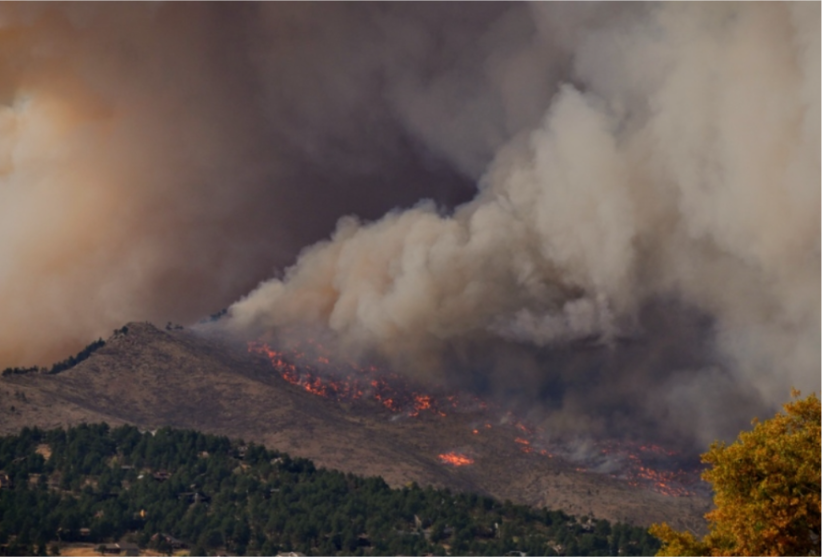
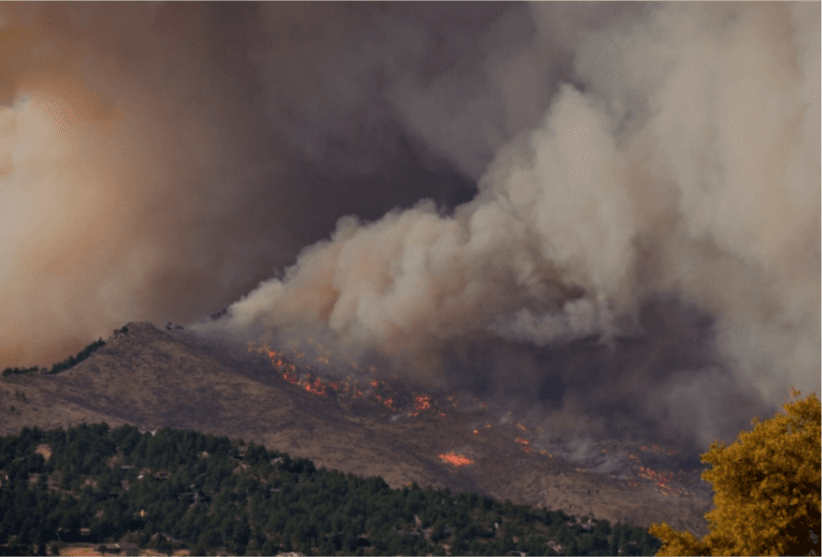
Military operations during war generate huge amounts of carbon emissions, as combat vehicles, fighter jets, and trucks consume large quantities of fossil fuels. Bombs and other explosives release harmful gases and pollutants into the atmosphere, in addition to destroying infrastructure, resulting in the emission of toxic gases and carbon dioxide. Moreover, harmful gases are also released during the rehabilitation process. Fires during war destroy forests, buildings, and oil resources, resulting in the release of large amounts of carbon emissions. The excessive use of war equipment, missiles, and other explosives also increases the problem of arms trading.
Excessive release of CO₂ absorbs heat and has been the biggest reason for global warming. Accordingly, this leads to an increase in the sea level and the melting of glaciers, posing a threat to coastal areas and islands. The unpredictability regarding the frequency of cyclones, heatwaves, drought, and floods has intensified. Additionally, increased CO₂ levels disrupt sea life, forests, and wildlife. Irregular temperatures may affect agriculture and farming, resulting in food insecurity and rising prices. The presence of carbon in the atmosphere may invite diseases and create health hazards. Oceans absorb the carbon and may adversely affect ocean life. It can be observed from the above that an increased CO₂ level has a cascading effect on economic well-being and social fabric.
Financial funding is an important component sustaining wars. A significant part of this money is generated through the exploitation of natural resources, causing deforestation, unregulated mining, and environmental degradation. Most conflicts between warring countries occur over control of natural resources, and following victory, these resources are often exploited intensively. At the same time, people frequently migrate from war zones to safer areas, where their dependence on forests, land, and water places additional pressure on local ecosystems. Consequently, the over-exploitation of natural resources for both survival and the financing of war can lead to long-term ecological imbalances and environmental degradation.
Disruptions in global trade with established partners may force countries to seek alternative sources to meet their needs, leading to longer transportation routes, the use of less efficient technologies, and greater reliance on environmentally harmful local resources, thereby increasing carbon emissions. The recent blockage of the Strait of Hormuz by Iran has led other nations to look for longer routes for the supply of oil and gas items, increasing pressure on local resources. For instance, the Russia-Ukraine war and Israel-Iran war significantly affected global energy markets, prompting greater reliance on fossil fuels. Meanwhile, disruptions in trade have created challenges for the transfer of environment-related technologies and sustainable products, thereby slowing progress towards achieving sustainable environmental goals. Apparently, trade disruptions not only affect economic growth but also exacerbate resource depletion and environmental degradation.
Military actions have significantly contributed to environmental degradation. The destruction of infrastructure, power stations, buildings, natural resources, oil and gas pipelines, oil wells, etc., through bombing, missile attacks, and air strikes releases toxic gases, particulate matter, and metals into the air, water, and soil. Further, the movement of heavy vehicles and machinery, along with the deployment of landmines during wars, reduces land fertility and productivity. Meanwhile, naval activities create marine environmental hazards through oil spills, waste dumping, and sonar disturbances. In addition, forests are cleared to establish military bases and construct roads, resulting in significant vegetation loss. As a result, military actions not only cause immediate environmental damage but also hinder recovery and sustainable development.
During geopolitical conflicts, animal species often migrate in search of survival. Continuous shelling and bombing, the movement of combat troops, and deforestation fragment and degrade habitats, posing a direct threat to biodiversity. Displaced species become heavily dependent on nearby habitats, which are often unable to support them adequately. Owing to the lack of suitable conditions for survival and the slow response of the international community, many species are at risk of extinction. Thus, geopolitical unrest not only endangers human lives but also causes irreversible losses to animal and plant species. As a result, it poses a serious threat to global environmental sustainability.
One of the finest solutions to ease geopolitical unrest is to promote diplomacy. Conflict resolution and amicable solutions to disputes are the most sustainable solutions to the environmental degradation caused by war. It is important to enforce international laws under institutions such as the United Nations and consider environmental degradation a serious violation; therefore, there must be provisions for heavy penalties for those violating environmental norms. In cases where war becomes inevitable, efforts must be made to adopt sustainable practices, avoid targeting environmentally fragile places, use energy-efficient technologies to reduce carbon emissions, and protect critical natural resources. Further, rehabilitation efforts should begin immediately after the conflict and include reforestation as well as the removal of hazardous substances and chemicals from the soil. Financial assistance from the international community should also be provided to help mitigate environmental damage. Ultimately, we must recognise that the Earth belongs to all of us, and protecting it is essential for our own survival.
1. Abbaraa, A., Zakieh, O., Rayes, D., Collin, S. M., Almhawish, N., Sullivan, F., et al. (2021). Weaponizing water as an instrument of war in Syria: Impact on diarrhoeal disease in Idlib and Aleppo governorates, 2011–2019. International Journal of Infectious Diseases, 108, 202–208. https://doi.org/10.1016/j.ijid.2021.05.030
2. Adrian T., Azour J., Chalk N., Gourinchas P. O., Kammer A., Selassie A. A., Srinivasan K., and Valdés R. (2026). How the War in the Middle East Is Affecting Energy, Trade, and Finance. Available at https://www.imf.org/en/blogs/articles/2026/03/30/how-the-war-in-the-middle-east-is-affecting-energy-trade-and-finance Accessed on 12.04.2026.
3. Akhundov, R. (2024a). The environmental consequences of military activity. Retrieved May 2, 2026, from https://www.researchgate.net/publication/380356613THE
4. Akhundov, R. (2025). Environmental warfare – Modern global challenge. Modeling, Control and Information Technologies, (7), 332–335. https://doi.org/10.31713/MCIT.2024.103
5. Aung, T. S. (2021). Satellite analysis of the environmental impacts of armed conflict in Rakhine, Myanmar. Science of the Total Environment, 781, 146758. https://doi.org/10.1016/j.scitotenv.2021.146758
6. Conflict and Environment Observatory (CEOBS). (2023). Global messages marking #EnvConflictDay 2023. Retrieved April 5, 2026, from https://ceobs.org/global-messages-marking-envconflictday-2023/
7. Conflict and Environment Observatory (CEOBS). (2025). How does war damage the environment? Retrieved May 4, 2026, from https://ceobs.org/how-does-war-damage-the-environment/
8. Coppock, R. W., & Dziwenka, M. M. (2020). Threats to wildlife by chemical and warfare agents. In R. C. Gupta (Ed.), Handbook of toxicology of chemical warfare agents (3rd ed., pp. 1077–1087). Academic Press. https://doi.org/10.1016/B978-0-12-819090-6.00063-5
9. del Castillo, G. (2014). War-torn countries, natural resources, emerging-power investors and the UN development system. Third World Quarterly, 35(10), 1911–1926. https://doi.org/10.1080/01436597.2014.971610
10. Depicker, A., De Baets, B., & Baetens, J. M. (2020). Wildfire ignition probability in Belgium. Natural Hazards and Earth System Sciences, 20, 363–376. https://doi.org/10.5194/nhess-20-363-2020
11. Fontaine, R. (2024). Strengthening environmental resilience in conflict zones: Analysis of UNEA-6 resolution and the PERAC principles. Brussels International Center. Retrieved May 5, 2026, from https://www.bic-rhr.com/research/strengthening-environmental-resilience-conflict-zones-analysis-unea-6-resolution-and-perac
12. Gaynor, Kaitlyn M., Fiorella, Kathryn J., Gregory, Gillian H., Kurz, David J., Seto, Katherine L., Withey, Lauren S., Brashares, and Justin S. (2026). War and wildlife: linking armed conflict to conservation. Frontiers in Ecology and the Environment. Vol. 14, Issue 10, pp. 533-542. John Wiley & Sons, Ltd., SN: 1540-9295, https://doi.org/10.1002/fee.1433
13. Garces, A., and Pires, I. C. (2025). The impact of armed conflict on biodiversity. Wild Animals. 1(1):2025001. DOI: 10.31893/wild.2025001 https://malque.pub/ojs/index.php/wa/article/view/2718
14. Gleick, P. H. (2014). Water, drought, climate change, and conflict in Syria. Weather, Climate, and Society, 6(3), 331–340. https://doi.org/10.1175/WCAS-D-13-00059.1
15. Hamad, R., Kolo, K., & Balzter, H. (2018). Land Cover Changes Induced by Demining Operations in Halgurd-Sakran National Park in the Kurdistan Region of Iraq. Sustainability, 10(7), 2422. https://doi.org/10.3390/su10072422
16. Harvey F. (2026). As Iran war exposes global dependence on fossil fuels, the biggest emitters are reaping the rewards. Available at https://www.theguardian.com/environment/2026/apr/07/iran-war-global-dependence-fossil-fuels-biggest-emitters-reaping-rewards Accessed on 05.05.2026.
17. Heinze, C., Meyer, S., Goris, N., Anderson, L., Steinfeldt, R., Chang, N., Le Quéré, C., and Bakker, D. C. E. (2015) The ocean carbon sink – impacts, vulnerabilities and challenges, Earth Syst. Dynam., 6, 327–358, https://doi.org/10.5194/esd-6-327-2015, 2015.
18. Hynes H. P., (2011).The Military Assault on Global Climate. Truthout. Available at https://truthout.org/authors/h-patricia-hynes/ Accessed on 01.05.2026.
19. International Fund for Animal Welfare (IFAW). (2022). Animals, People and War: The Impact of Conflict. Available at https://d1jyxxz9imt9yb.cloudfront.net/resource/1280/attachment/original/IFAW_ANIMALS_PEOPLE_WAR_REPORT_FINAL_LowRes.pdf Accessed on 06.05.2026.
20. Lawrence, M. J., Stemberger, H. L. J., Zolderdo, A. J., Struthers, D. P., & Cooke, S. J. (2015). The effects of modern war and military activities on biodiversity and the environment. Environmental Reviews, 23(4), 443–460. https://doi.org/10.1139/er-2015-0039
21. Leal Filho, W., Eustachio, J. H. P. P., Fedoruk, M., & Lisovska, T. (2024). War in Ukraine: An overview of environmental impacts and consequences for human health. Frontiers in Sustainable Resource Management, 3, 1423444. https://doi.org/10.3389/fsrma.2024.1423444
22. Lesk, C., Rowhani, P. & Ramankutty, N. (2016). Influence of extreme weather disasters on global crop production. Nature 529, 84–87. https://doi.org/10.1038/nature16467
23. Liashenko, D. (2022). Marine environmental damage during wars: Compensation mechanisms and ukraine’s perspective. Available at https://comitemaritime.org/wp-content/uploads/2022/03/Diana-Liashenko-MARINE-ENVIRONMENTAL-DAMAGE-DURING-WARS-COMPENSATION-MECHANISMS.pdf Accessed on 18.04.2026.
24. Malikyar G. M. (2026). The Impacts of War Between Iran, Israel and US on the RegionalEnvironment and Ecosystems. Available at https://www.researchgate.net/publication/404356944_The_Env-Impacts_of_war_in_Iran-Israel?channel=doi&linkId=69f4e6c0964b1d1df98d5356&showFulltext=true Accessed on 06.05.2026.
25. Nakamura, J., Ishida, M. (2025). Global Warming and CO2 Emissions. In: Blueprint for a Methanol Society. Springer, Singapore. https://doi.org/10.1007/978-981-95-3465-4_1
26. Negasi, S., Birhane, E., Gordon, C., Haile, M., Taheri, F., Azadi, H., & Scheffran, J. (2018). Environmental impacts and causes of conflict in the Horn of Africa: A review. Earth-Science Reviews, 177, 284–290. https://doi.org/10.1016/j.earscirev.2017.11.016
27. Negret, A. J., Sonter, L., Watson, J. E. M., Possingham, H. P., Jones, K. R., Suarez, C., Ochoa-Quintero, J. M., & Maron, M. (2019). Emerging evidence that armed conflict and coca cultivation influence deforestation patterns. Biological Conservation, 239, 108176. https://doi.org/10.1016/j.biocon.2019.07.021
28. Novakovska I., Belousova N., and Hunko L. (2025). Land Degradation in Ukraine as a Result of Military Operations. Acta Scientiarum Polonorum Administratio Locorum. Issue No: 1. pp. 129-145. Available at https://www.ceeol.com/search/article-detail?id=1331074
29. Olson, K. R., & Morton, L. W. (2019). Long-term fate of Agent Orange and dioxin TCDD contaminated soils and sediments in Vietnam hotspots. Open Journal of Soil Science, 9(1), 1–34. https://doi.org/10.4236/ojss.2019.91001
30. Qumsiyeh, M. B. (2024). Impact of the Israeli military activities on the environment. International Journal of Environmental Studies, 81(2), 977–992. https://doi.org/10.1080/00207233.2024.2323365
31. Santini, A., Maresi, G., Richardson, D. M., & Liebhold, A. M. (2023). Collateral damage: Military invasions beget biological invasions. Frontiers in Ecology and the Environment, 21(10), 469–478. https://doi.org/10.1002/fee.2640
32. Sun, R., Abouarghoub W., Demir E., Potter A., (2026). Geopolitical disruptions and maritime transitions: Environmental and economic costs of rerouting. Transportation Research Part A: Policy and Practice. Volume 203, 104737, ISSN: 0965-8564, https://doi.org/10.1016/j.tra.2025.104737.
33. Thombs, R. P., Jorgenson, A. K., & Clark, B. (2025). Reducing US military spending could lead to substantial decreases in energy consumption. PLoS Climate, 4(7), e0000569.
34. United Nations. (2026). How conflict impacts our environment. Retrieved May 3, 2026, from https://www.un.org/en/peace-and-security/how-conflict-impacts-our-environment
35. United Nations (2008).From Conflict to Peacebuilding: The Role of Natural Resources and Environment. Available at https://www.un.org/peacebuilding/sites/www.un.org.peacebuilding/files/documents/wgll_background_note_08_05_2008.pdf Accessed on 04.04.2026.
36. World Health Organization. (2024). White phosphorus. Geneva, Switzerland: Author. Retrieved May 1, 2026, from https://www.who.int/news-room/fact-sheets/detail/white-phosphorus